The Center on Main™ in Verrado®
4239 N Village Street
Buckeye, AZ 85396

Monday and Friday
7:30 pm - 8:30 pm

The Center on Main™ in Verrado®
4239 N Village St
Buckeye, AZ 85396

Monday and Friday
7:30 pm - 8:30 pm

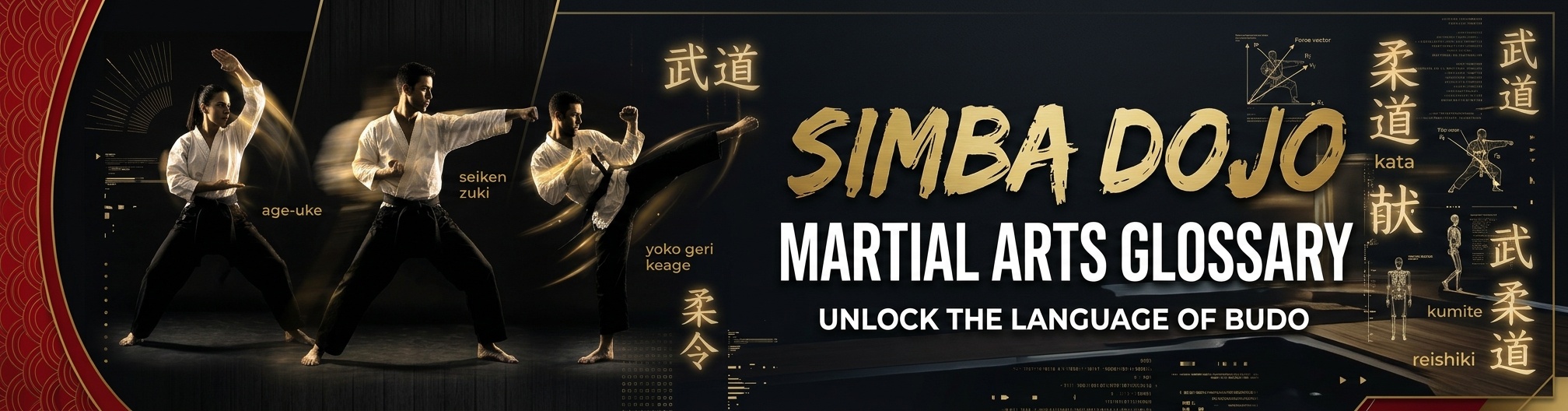
simba dojo glossary banner v2

Shotokan Karate

Search for glossary terms (regular expression allowed)

Glossaries

Term Definition
Shotokan Karate

Shotokan Karate (松濤館流) is one of the most widely practiced and influential traditional Japanese martial arts styles in the world. Founded by Master Gichin Funakoshi (along with his son, Yoshitaka Funakoshi) in the early-to-mid 20th century, Shotokan adapted Okinawan karate methods into a structured Japanese Budo discipline.

Etymology & Origin of the Name

  • Shōtō (松濤): Meaning "Pine Waves" (the sound of wind blowing through pine trees), which was the pen name Master Funakoshi used when writing poetry.

  • Kan (館): Meaning "Hall" or "House."

  • Shotokan: Translates directly to "The Hall of Shoto," referring to the original dojo established in Tokyo in 1939.

Key Characteristics & Mechanics

  • Deep, Grounded Stances: Characterized by long, powerful stances—such as Zenkutsu-dachi (forward stance), Kokutsu-dachi (back stance), and Kiba-dachi (horse-riding stance)—which build leg strength, lower the center of gravity, and generate Maximum root power.

  • Linear & Explosive Movement: Emphasizes direct, high-velocity linear techniques (Ikken Hissatsu—"to kill/defeat with one blow"), utilizing full-body integration, sharp hip rotation (koshino kaiten), and decisive focus (kime).

  • Clear Distinctions in Training: Classically structured around the three pillars (Sanbon-ba):

    1. Kihon (基本): Fundamentals and repetitive line drills.

    2. Kata (形): Preserved patterns of formal defensive and offensive sequences.

    3. Kumite (組手): Structured and progressive sparring systems.

Core Philosophical Principles

Shotokan places equal—if not greater—emphasis on character development, mental discipline, and morality over mere physical combat. Master Funakoshi encapsulated this philosophy in the Twenty Precepts of Karate (Niju Kun) and the Dojo Kun (dojo rules), leading with the foundational principle:

"Karate ni sente nashi" — There is no first strike in karate.

Author - Sensei CC
Hits - 34
Ask a question
1000 characters left