The Center on Main™ in Verrado®
4239 N Village Street
Buckeye, AZ 85396

Monday and Friday
7:30 pm - 8:30 pm

The Center on Main™ in Verrado®
4239 N Village St
Buckeye, AZ 85396

Monday and Friday
7:30 pm - 8:30 pm

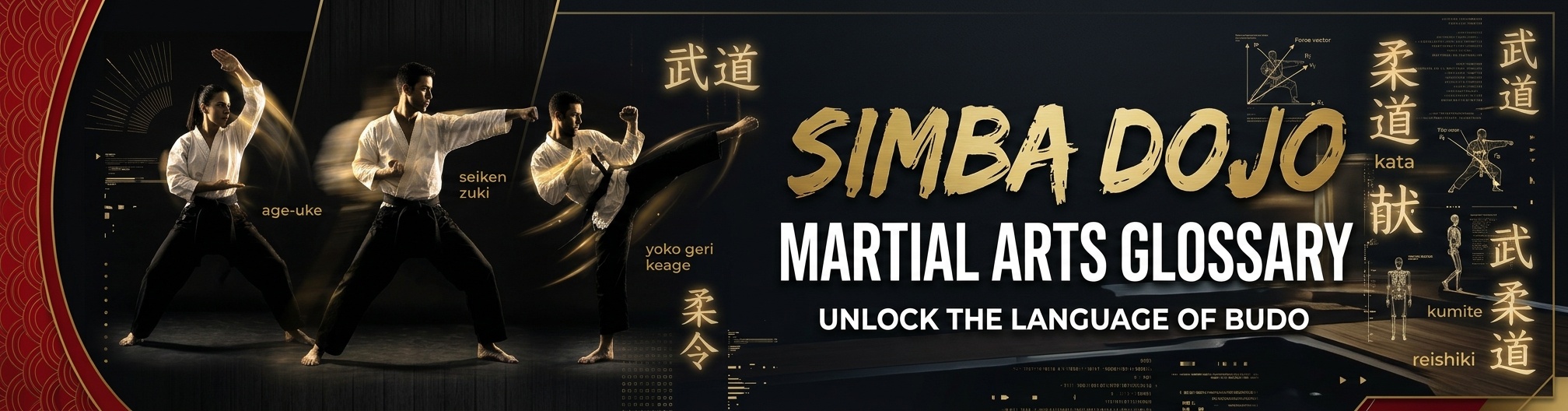
simba dojo glossary banner v2

Hachiji-dachi

Search for glossary terms (regular expression allowed)

Glossaries

Term Definition
Hachiji-dachi

Hachiji-dachi (八字立ち), often referred to simply as Hachi-dachi (八立ち), translates directly as "Natural Stance," "Figure-Eight Stance," or "Open-Leg Readiness Posture." It is the universal fundamental open posture in traditional Japanese martial arts and modern Shotokan Karate, serving as the foundational baseline within the Shizentai (natural posture) stance family.

Etymology & Structural Breakdown

  • Hachi (八): "Eight."

  • Ji (字): "Character," "letter," or "kanji."

  • Dachi / Tachi (立ち): "Stance," "posture," or "standing position."

  • Literal & Visual Meaning: Standing in the shape of the Japanese kanji character for eight (八), where the heels remain positioned inside and the feet flared outward to create a broad, balanced base.

Key Technical Mechanics & Alignment

  • Foot Position & Distance: The feet are spaced shoulder-width apart (measured from outer shoulder edge to heel centers). The heels lie on a straight parallel line, while both toes are angled outward at roughly 45 degrees.

  • Weight Distribution: Evenly balanced 50% on the left foot / 50% on the right foot, rooted across the balls and outer edges of the feet (sokuto).

  • Knees & Pelvis Alignment: The knees remain slightly relaxed and unfrozen—never hyperextended—allowing fluid directional movement. The pelvis is tucked slightly forward to compress the lower abdomen (Seika Tanden), keeping the spine vertical and relaxed.

  • Upper Body & Arms: The shoulders remain dropped and relaxed (seika tanden alignment). When assumed as a formal readiness posture (Yoi), the arms are held in front of the lower hips with fists lightly clenched, maintaining dynamic awareness without premature tension.

Comparative Placement Within Shizentai (Natural Stances)

Stance Name Kanji Foot Orientation Primary Function / Context
Heisoku-dachi 閉足立ち Feet together, parallel Formal attention, bow preparation
Musubi-dachi 結び立ち Heels together, toes open 45° Formal standing bow (ritsu-rei)
Hachiji-dachi 八字立ち Shoulder-width, toes open 45° Standard readiness posture (Shizentai / Yoi)
Uchihachiji-dachi 内八字立ち Shoulder-width, toes turned inward Internal tension training, pigeon-toed base
Heiko-dachi 平行立ち Shoulder-width, feet parallel straight Fundamental line drills, balanced posture

Functional Context & Budo Value

  • Physical & Mental Readiness (Kamae & Zanshin): Hachiji-dachi represents an alert, balanced state devoid of telegraphic muscular tension. It allows a practitioner to initiate explosive footwork or defensive blocking instantly in any direction (Happō — 360-degree awareness).

  • The Transition Point of Kata: Traditional kata begin and conclude in Hachiji-dachi during the formal Yoi (readiness) and Yame (restoration) commands, signifying the return to emotional composure and physical center.

  • Embodiment of Natural Balance: In Master Gichin Funakoshi's teachings, Shizentai postures condition the martial artist to maintain erect alignment, clear breathing, and unshakeable root balance without resorting to unnatural stiffness.

Author - Sensei Miller
Hits - 11
Synonyms: Open stance
Ask a question
1000 characters left