The Center on Main™ in Verrado®
4239 N Village Street
Buckeye, AZ 85396

Monday and Friday
7:30 pm - 8:30 pm

The Center on Main™ in Verrado®
4239 N Village St
Buckeye, AZ 85396

Monday and Friday
7:30 pm - 8:30 pm

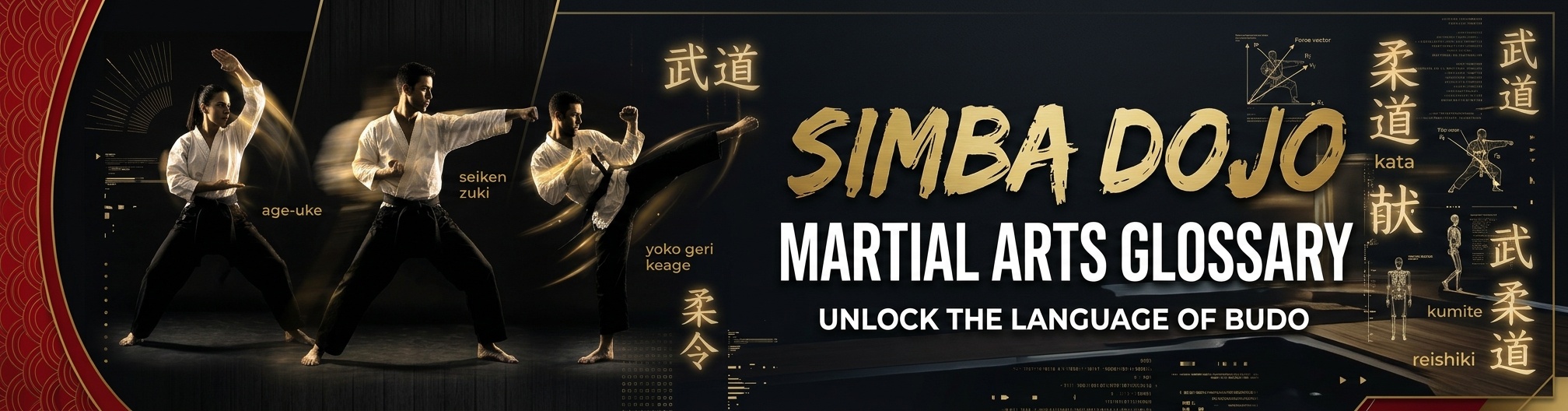
simba dojo glossary banner v2

Katanohai

Search for glossary terms (regular expression allowed)

Glossaries

Term Definition
Katanohai

Katanohai (型解意 / 形の解意), translated literally as "Explanation and Understanding of Kata Intent" or "Structural Interpretation of Form," is a traditional Japanese martial arts term referring to the comprehensive intellectual and practical analysis of a kata’s core purpose, combative logic, and technical application.

Etymology & Structural Breakdown

  • Kata (型 / 形): "Form" or "Pattern"—the formal sequence of traditional offensive and defensive techniques.

  • No (の): Possessive Japanese particle linking the terms ("of").

  • Kai / Kai-i (解意): "Explanation of meaning," "understanding of intent," or "interpretive analysis."

Key Characteristics & Distinction in Budo

While often used in conjunction with related instructional concepts, Katanohai occupies a specific role in the study of traditional karate forms:

  • Katanohai vs. Bunkai (分解): Bunkai literally means "analysis" or "disassembly"—breaking down individual kata movements step-by-step against an opponent. Katanohai is the overarching synthesis—explaining why those movements were structured in that specific sequence, detailing the underlying mechanical principles, tactical intent, and strategic design of the form as a whole.

  • Katanohai vs. Kaisetsu (解説): Where Kaisetsu provides general verbal instruction or physical commentary during line drills, Katanohai focuses deeply on the underlying martial philosophy, distance (maai), anatomical targets, and practical application (ōyō) embedded within the kata.

Function & Application in Training

  1. Bridging Form and Reality: Helps practitioners transition from performing kata as simple physical exercise (moving meditation) to understanding it as an active blueprint for self-defense.

  2. Uncovering Hidden Mechanics: Explores body dynamics, joint manipulation (kansetsu-waza), throwing mechanics (nage-waza), and vital-point strikes (kyusho-jutsu) concealed within seemingly basic blocks or strikes.

  3. Preserving Lineage: Ensures that the core combative principles intended by historical masters are correctly comprehended and passed down rather than lost to superficial aesthetic performance.

Author - Sensei Miller
Hits - 3
Ask a question
1000 characters left