Concepts
Concepts Category

Concepts Category
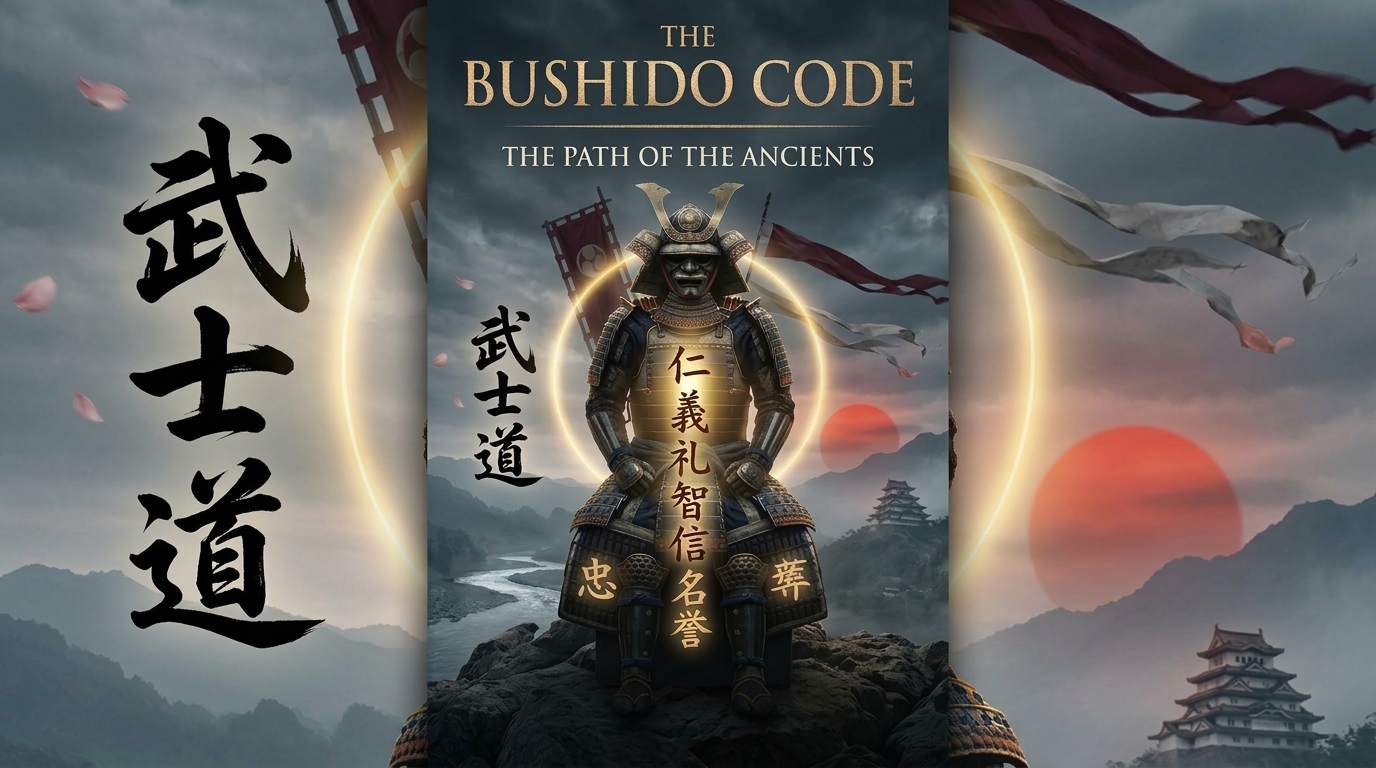
The Bushido code—literally translated as "the way of the warrior"—is one of history's most enduring ethical frameworks. Developed over centuries in feudal Japan, this unwritten moral code governed the conduct, values, and lifestyle of the samurai class. Although the samurai era officially ended during the Meiji Restoration in the late 19th century, the core principles of Bushido continue to exert a profound influence on modern Japanese culture, business ethics, and global martial arts philosophy.
Historical Origins
Bushido evolved alongside the rise of Japan’s samurai class between the 10th and 14th centuries. Influenced heavily by three foundational philosophies, the code blended spiritual discipline with practical military tradition:
Shintoism: Embedded deep respect for nature, ancestors, and loyalty to the Emperor and land.
Buddhism (especially Zen): Taught detachment from material desires, fearlessness in the face of death, and mental clarity under pressure.
Confucianism: Formed the basis for social order, duty, respect for authority, and moral righteousness within relationships.
During the peaceful Edo period (1603–1867), under the Tokugawa Shogunate, samurai transitioned from frontline warriors to administrators and scholar-bureaucrats. It was during this era that Bushido was formalised and codified in literature, most famously by Inazo Nitobe in his 1899 book, Bushido: The Soul of Japan.
The Seven Virtues of Bushido
Nitobe identified seven primary virtues that defined the samurai ethos:
Gi (Integrity / Righteousness): Doing the right thing simply because it is right. A samurai makes decisions based on justice and moral clarity without hesitation.
Yū (Courage): Heroic bravery in action. Courage in Bushido is not blind recklessness, but the mastery of fear to execute right action.
Jin (Benevolence / Compassion): Through intense training, samurai possessed immense power, which carried a duty to protect the weak and show mercy.
Rei (Respect / Politeness): Courtesy and respect extended to allies, superiors, and even enemies. Politeness was seen as a reflection of inner strength rather than mere social protocol.
Makoto (Honesty / Sincerity): Truthfulness in word and deed. For a samurai, speaking an intention was equivalent to performing it; promises required no formal contract.
Meiyo (Honor): A samurai’s personal dignity and reputation were paramount. Actions that brought shame reflected negatively not just on the individual, but on their ancestors and lineage.
Chūgi (Loyalty): Absolute devotion to one's master, lord, and community. Unwavering loyalty was considered the highest virtue in samurai society.
Bushido in the Modern Era
While the samurai no longer walk the streets, the philosophical DNA of Bushido remains deeply embedded in modern society:
Corporate Culture: Principles like loyalty (Chūgi), integrity (Gi), and respect (Rei) shape workplace dynamics, teamwork, and business etiquette in Japan.
Martial Arts: Traditional disciplines such as Kendo, Judo, Aikido, and Karatedo place heavily emphasis on character development, respect, and self-restraint over mere physical combat.
Personal Development: Worldwide, individuals adopt Bushido's focus on self-mastery, discipline, and ethical living as a guide for personal growth and leadership.
The Bushido code serves as a timeless reminder that true strength lies not in the capacity to overpower others, but in the discipline to master oneself and live with unwavering purpose and integrity.
 Originating in Japan, karate is recognized as a Budo (martial art), a category that also includes disciplines such as Kyudo (archery), Kendo (swordsmanship), and Judo (grappling). The word "Karate-Do" is derived from three distinct Japanese characters: Kara ("empty"), Te ("hand"), and Do ("way"). Together, Karate-Do translates to "the way of the empty hand," representing a system of weaponless self-defense and personal growth.
The roots of karate trace back to Okinawa—the largest island in the former Ryukyu Kingdom, south of mainland Japan. In the 1500s, Chinese traders introduced Chinese boxing (Kung Fu) to the island. Okinawans integrated these techniques with their indigenous fighting styles, forming an art initially known as To-Te. Prior to 1789, this system was taught in strict secrecy, primarily reserved for high-ranking families.
In 1879, Okinawa officially became part of Japan, allowing the art to be shared more openly. Around this time, the suffix -Do was emphasized, shifting the focus from mere fighting to physical mastery paired with character development. By 1900, karate was incorporated into the Okinawan school system as part of physical education. In the 1920s, Okinawan educators brought the discipline to mainland Japan, introducing it to several major universities. Following World War II, American servicemen stationed in Japan began practicing karate and brought the tradition back to the United States. Today, karate is practiced by millions worldwide (Terry, 2006).
Introduction
Over the past few decades, participation in martial arts as a leisure activity has grown steadily among Americans. Once viewed strictly through the lens of traditional combat, martial arts have evolved into a widely accepted form of exercise suitable for all age groups, with significant potential benefits when integrated into primary and secondary school curricula (Wang et al., 2017).
A core practical benefit of martial arts remains self-defense, fostering a sense of personal security and a commitment to protecting one's family and community. Beyond self-defense, martial arts offer profound health and fitness benefits. The rigorous cardiovascular demands enhance blood circulation and support immune function, leading to increased daily energy and overall vitality.
For adolescents struggling with impulse control or behavioral issues, karate provides an effective therapeutic outlet. The practice develops self-monitoring and self-regulation skills centered around three primary pillars:
By teaching mind-body integration, karate equips practitioners to face everyday life challenges with resilience (Lakes & Hoyt, 2004). Research indicates that martial arts often foster higher intrinsic motivation compared to standard sports. While competitive athletics sometimes prioritize winning or external fame over holistic development, traditional martial arts emphasize comprehensive physical and psychological growth (Cynarski et al., 2009).
Health Benefits and Behavioral Interventions
Regular physical activity is vital for mitigating chronic health conditions, and organized martial arts offer a well-established framework for sustained fitness. Studies consistently demonstrate positive mental health and psychological outcomes across diverse age groups, though age-related changes in mobility and energy must be factored into training (Origua Rios et al., 2017).
School-based interventions using martial arts like Taekwondo have shown notable cognitive and emotional benefits. Students engaging in traditional martial arts training demonstrate superior affective self-regulation, improved classroom conduct, enhanced teamwork, and better performance on psychological tests compared to non-practicing peers (Lakes & Hoyt, 2004). Notably, research reveals that male participants often show significant gains in classroom behavior and cognitive self-control through these programs. Improved self-regulation builds emotional resilience, reducing the risk of academic and personal burnout.
Emerging Trends in Treating Adolescent Violence
Reaching at-risk youth through traditional talk therapy alone presents unique challenges. Adolescence is a critical developmental transition characterized by identity formation, heightened emotional sensitivity, and an increased susceptibility to risky behaviors such as substance abuse.
Structured physical interventions offer a promising alternative. Integrating traditional martial arts into educational programs helps adolescents develop healthy coping mechanisms, build self-esteem, and process emotions constructively. By replacing destructive outlets with purposeful discipline, structured training supports positive psychological development during these formative years.
Conclusion
Conventional violence-prevention strategies in early education often yield limited long-term success due to a lack of student engagement. In response, traditional martial arts programs have been piloted in elementary and middle schools as a targeted intervention for youth at risk of violence and delinquency.
Findings suggest that traditional martial arts training significantly aids in reducing juvenile offenses. Sustained practice acts as a protective buffer against depression and promotes overall well-being. By fostering discipline, self-regulation, and emotional stability, traditional karate serves as a powerful, holistic tool for positive behavioral modification and personal development.
References
Cynarski, Wojciech J., Lothar Sieber, Kazimierz Obodyński, Milan Ďuriček, Paweł Król, and Marian Rzepko. 2009. “Section III-Physical Activity & Social Issues Factors of Development of Far Eastern Martial Arts in Central.” Europe Journal of Human Kinetics 22:69–76. doi: 10.2478/v10078-009-0025-2.
Lakes, Kimberley D., and William T. Hoyt. 2004. "Promoting Self-Regulation through School-Based Martial Arts Training." Journal of Applied Developmental Psychology 25(3):283–302. doi: 10.1016/J.APPDEV.2004.04.002.
Origua Rios, Sandra, Jennifer Marks, Isaac Estevan, and Lisa M. Barnett. 2017. "Health Benefits of Hard Martial Arts in Adults: A Systematic Review." Https://Doi.Org/10.1080/02640414.2017.1406297 36(14):1614–22. doi: 10.1080/02640414.2017.1406297.
Terry, Charles M. 2006. "The Martial Arts." Physical Medicine and Rehabilitation Clinics 17(3):645–76. doi: 10.1016/J.PMR.2006.05.001.
Twemlow, stuart W., and Frank C. Sacco. 1998. "The Application of Traditional Martial Arts Practice and Theory to the Treatment of Violent Adolescents." Adolescence 33(131).
Wang, Caixia, Jun Liu, Caixia Wang, and Jun Liu. 2017. "A Study on the Teaching Content of Martial Arts in Primary and Secondary Schools from the Perspective of Cultural Inheritance." Advances in Physical Education 8(1):1–6. doi: 10.4236/APE.2018.81001.
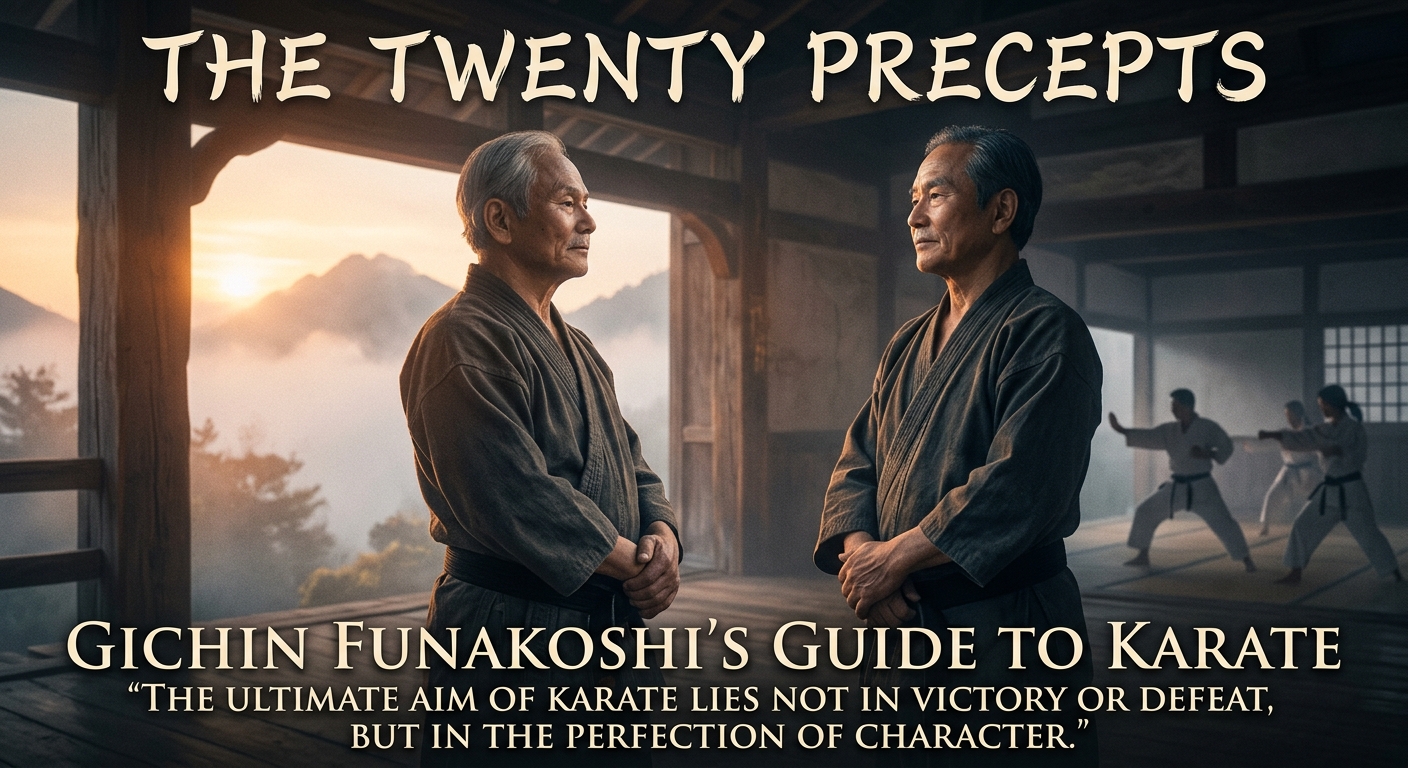
When Gichin Funakoshi (1868–1957) brought Karate from the island of Okinawa to mainland Japan in the early 1920s, he was not merely introducing a system of kicks, blocks, and strikes. He was offering a way of life—a Do (path) rooted in character, restraint, and mental discipline.
To ensure that the physical power taught in the dojo was guided by a strong moral framework, Funakoshi compiled the Nijū Kun (Twenty Precepts). These principles form the philosophical backbone of modern Shotokan Karate and serve as practical maxims for daily living.
Funakoshi believed that a martial art stripped of morality becomes nothing more than violence. Drawing heavily from Zen Buddhism, Confucianism, and Bushido (the code of the samurai), he viewed the dojo as a training ground for the soul. The ultimate goal of Karate, as Funakoshi famously noted, was not victory or defeat, but the perfection of the character of its participants.
While traditionally taught and memorized in Japanese, the precepts distill into clear, universal concepts:
Karate-do begins and ends with respect (Rei).
Etiquette and courtesy are not superficial formalities; they are expressions of humility and consideration for others.
There is no first strike in Karate (Karate ni sente nashi).
Karate is strictly defensive. A true martial artist never initiates violence or seeks conflict.
Karate stands on the side of justice.
Martial skill must only be used to defend the innocent, uphold morality, and oppose wrongfulness.
First know yourself, then know others.
Self-awareness and honest self-reflection must precede any attempt to evaluate or control an opponent.
Mentality over technique (Shin-gi-tai).
Mindset and spirit are far more critical than physical mastery. Technique without proper intent is hollow.
The mind must be set free.
Avoid rigidity. Keep the mind open, adaptable, and unattached so it can respond freely to any situation.
Calamity springs from carelessness.
Negligence, overconfidence, and loss of awareness invite injury and failure both in and out of combat.
Do not think Karate training is only in the dojo.
The principles learned during physical practice must be integrated into work, family, and daily interactions.
Karate is a lifelong pursuit.
There is no final destination in martial practice; learning is continuous and infinite.
Apply Karate to all things; therein lies its beauty.
When the discipline, focus, and harmony of Karate permeate everyday life, one discovers its subtle depth (Myo).
Karate is like boiling water.
If continuous heat is not applied, it cools. Consistent practice is required to maintain progress.
Do not think of winning; think rather of not losing.
Fixating on victory creates ego and recklessness. Focus instead on patience, composure, and avoiding critical mistakes.
Make adjustments according to your opponent.
Adaptability is essential. Victory comes from recognizing vulnerabilities and shifting strategy dynamically.
The outcome of a battle depends on how one handles emptiness and fullness.
Manage strengths (fullness) and weaknesses (emptiness)—both your own and your opponent's—tactically.
Think of hands and feet as swords.
Treat your body with seriousness and precision, knowing the gravity of the power you cultivate.
When you step beyond your gate, you face a million enemies.
Remain alert when entering the world. It is often an individual's own reckless behavior or lack of awareness that invites trouble.
Stances are for beginners; advanced practitioners use natural positions.
Formal stances build foundational strength and mechanics. Over time, techniques become natural and fluid.
Perform kata correctly; actual combat is another matter.
Kata (pre-arranged forms) preserves technique and ideal form, but real conflict is unpredictable and requires spontaneous adaptation.
Do not forget the control of power, elasticity, and speed.
Master physical dynamics: knowing when to use hard or soft power, when to expand or contract the body, and when to act quickly or slowly.
Be constantly mindful, diligent, and resourceful.
Continuously apply these precepts in your life, seeking new ways to cultivate personal growth every day.
| Theme | Primary Focus | Precepts |
| Etiquette & Ethics | Respect, non-aggression, and justice | 1, 2, 3 |
| Mindset & Awareness | Self-control, alertness, and lifelong study | 4, 5, 6, 7, 8, 9, 10, 16, 20 |
| Combat Strategy | Adaptability, restraint, and environmental awareness | 11, 12, 13, 14, 15 |
| Physical Application | Progression from formal technique to natural movement | 17, 18, 19 |
While written in early 20th-century Japan, Funakoshi's precepts transcend physical self-defense. Principles like Karate ni sente nashi (there is no first strike) apply directly to conflict de-escalation. Precepts on adaptability, continuous effort (like boiling water), and self-awareness offer timeless guidance for personal development, leadership, and emotional intelligence.
Gichin Funakoshi designed Karate not as a tool for violence, but as a framework for building character. By living these twenty precepts, a practitioner transitions from merely learning how to fight to mastering the art of living.
For a detailed breakdown of these guiding principles, Gichin Funakoshi's Twenty Guiding Principles of Karate offers a clear overview of the philosophy and its core precepts.